
News
FRIENDLY/link Nantong zhuolida Ali SAMSAN Corrosion machining Nantong zhuolida HJD Shenzhen zhuolida Esprit print
Whether to replace etching fluid is a core question in the mass production of precision etched mesh, and the management of etching fluid directly determines product dimension accuracy, aperture consistency and the probability of hole blockage for etched mesh. Many new production personnel mistakenly believe that etching fluid can be used continuously without replacement as long as the etching speed meets requirements. In fact, etching fluid will continuously change its chemical composition during the photochemical etching reaction, and regular replacement or renewal of etching fluid is an indispensable part of stable etched mesh production.
In the etching reaction, metal materials are continuously dissolved into the etching fluid. With the accumulation of metal ions, the activity of etching fluid gradually decreases. The etching rate will slow down obviously, the side undercut becomes unstable, and the dimensional tolerance of etched mesh is hard to control. High concentration of metal ions will also form solid precipitates, which fall into tiny holes and cause hole blockage of etched mesh. At this stage, simply adding new chemical agents cannot fully restore the performance of etching fluid. The impurity content has exceeded the safe threshold, and complete replacement of etching fluid is required.
Besides metal ion accumulation, contamination is another key reason to replace etching fluid. In the production process, photoresist fragments, oil stains and workshop dust will continuously mix into the etching fluid. These impurities will pollute the liquid system, scratch the surface of metal workpieces and lead to uneven etching on the surface of etched mesh. Even with circulating filtration devices, tiny organic debris will keep accumulating over time. Once the impurity level exceeds the filter capacity, the quality of etched mesh will fluctuate in batches, and the scrap rate rises sharply, which means the etching fluid needs to be drained and replaced.
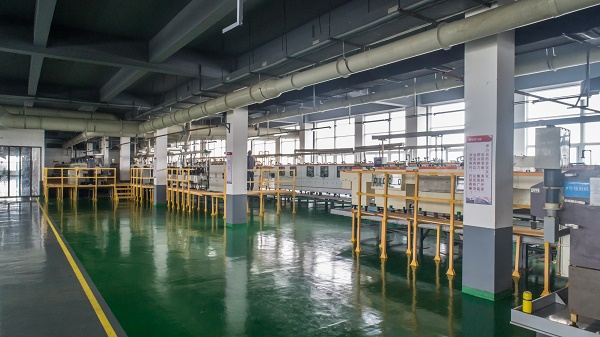
It should be noted that the replacement of etching fluid is not a fixed-cycle operation. Factories producing etched mesh usually adopt a combined strategy of real-time monitoring, online replenishment and periodic replacement. In the early and middle service life of etching fluid, workers test specific gravity, PH value and metal ion concentration regularly. When the indexes slightly deviate from the standard range, new raw liquid can be supplemented to adjust the activity of etching fluid, so as to extend the service time and reduce production cost. When the indexes exceed the upper limit, partial or full replacement of etching fluidmust be carried out immediately.
Improper handling of expired etching fluid will bring multiple risks to etched mesh production. If manufacturers keep using aging etching fluid blindly, the etching depth of products in the same batch will differ greatly, the edge of micropores will appear rough burrs, and hole blockage defects will increase significantly. Frequent quality complaints and rework will offset the cost saved by delaying etching fluid replacement. Meanwhile, unstable etching fluid will also increase the difficulty of process debugging and reduce the consistency of mass-produced etched mesh.
In summary, etching fluid does need to be replaced in the etching process. Online chemical replenishment can maintain the performance of etching fluid for a period, but long-term continuous use will lead to excessive metal ions and impurities. Scientific management of etching fluid with monitoring, replenishment and regular replacement is critical to stabilize the yield of etched mesh, avoid hole blockage, and guarantee the precision of micro-hole structures for etching parts applied in new energy, medical and semiconductor industries.

 189-3869-3452 0513-8160 1666
 E-MAIL:yw5@zldsmt.com
 QQ:$qq
 No. 268, Jinchuan Road, Nantong high tech Industrial Development Zone, Tongzhou District, Nantong City, Jiangsu Province
All Rights Reserved © 2019-2030Nantong Zhuolida metal Technology Co., Ltd.
ICP:【苏ICP备17060045号-3】


 TEL
 Products
 News
 About us